Five CPG Brands I Think Will Get Acquired | CPG | CPG Acquisitions | Left Hand Agency CPG High Five
Big food has a growth problem. Companies doing over a billion dollars in sales grew a half of a percent in 2024
.
In that same time frame, brands holding less than one percent of market share drove 27% of all the growth in food. While 27% of a small brand is much less than 1% of a billion, it’s still an outsized number.
Momentum for emerging brands is real and it’s why bigger brands are often buying their way in vs. investing in R&D (let’s be real, they’re doing both).
These brands know that buying growth is faster than inventing it.
PepsiCo tried to build its own prebiotic soda, gave up, and then paid almost $2 billion for Poppi. Hershey announced it wanted to double its salty snack business and then went and bought LesserEvil. These brands are telegraphing the gaps and then filling them.
I'm mostly neutral on all of this. Building a brand is brutally hard and founders who actually pull it off deserve the payday. But, I've also seen what comes after. Ben and Jerry's sold in 2000 with a written promise it would stay itself, and 25 years later it's fighting its own parent company in court over whether it's allowed to have opinions.
The change can be especially dramatic for natural brands where ingredients they didn’t want in the mix suddenly creep in, because scaling is hard (just ask Good Culture which grew so fast they couldn’t pace demand).
I’ve been eyeing some brands making some serious headway in stale categories or categories with serious headroom.
Here are five of them I think get bought in the next few years - plus some honorable mentions!
1. Chomps

They did $660 million last year and are tracking toward $900 million, they're in about 65,000 doors, and Forbes reports they've hired bankers to look at their options. Some of the success is timing. GLP-1s and the protein obsession arrived at exactly the right moment for meat sticks. But Chomps, New Primal, Archer and Mighty Spark have also genuinely changed what a meat stick is: less sugar, more protein, and none of that oily film that used to coat the roof of your mouth.
Chomps leads because they've been the most aggressive on marketing. The number that always floors me is that 81% of their growth last year came from people who had never bought a meat snack before. They didn't steal share, they went and found new households - if you have ever worked in CPG you know this is incredibly difficult. Jack Link's lost 573 basis points in three years while Chomps gained 822.
Full disclosure, I have a meat stick problem and I am not a neutral party. I prefer New Primal. I ate a Mighty Spark teriyaki today. I’m obsessed. I like Chomps too (their chili lime flavor is dynamite!). Chomps has the mojo and the balance sheet, and an acquisition would mean a cash infusion for marketing that locks in the lead. The competition is fierce.
2. Olipop

They have $500 million in revenue, presence in about one in five American households, and a founder who said the last round was the last round. Then in August, Ben Goodwin handed the CEO job to an operator from Electrolit and moved himself to innovation.
I’m not a consumer but still think prebiotic soda is riding a wave that will hang on but is settling. What do I know though? My neighbors have switched over entirely. The problem isn't demand, it's that the aisle got crowded fast. Bloom Pop launched at Walmart and cleared $1 million in two weeks. Health-Ade has SunSip. Suja dug up Slice from the early 2000s. Cove is coming down from Canada. And Pepsi and Coke both jammed fiber into their own colas. Olipop has to break out of that crowd to stay a contender.
It’s worth noting Poppi's sales actually fell in the first half of this year after a rough distribution handoff to PepsiCo. This could be good news for Olipop or a harbinger of a food fad that’s at its peak - time will tell.
3. Goodwipes
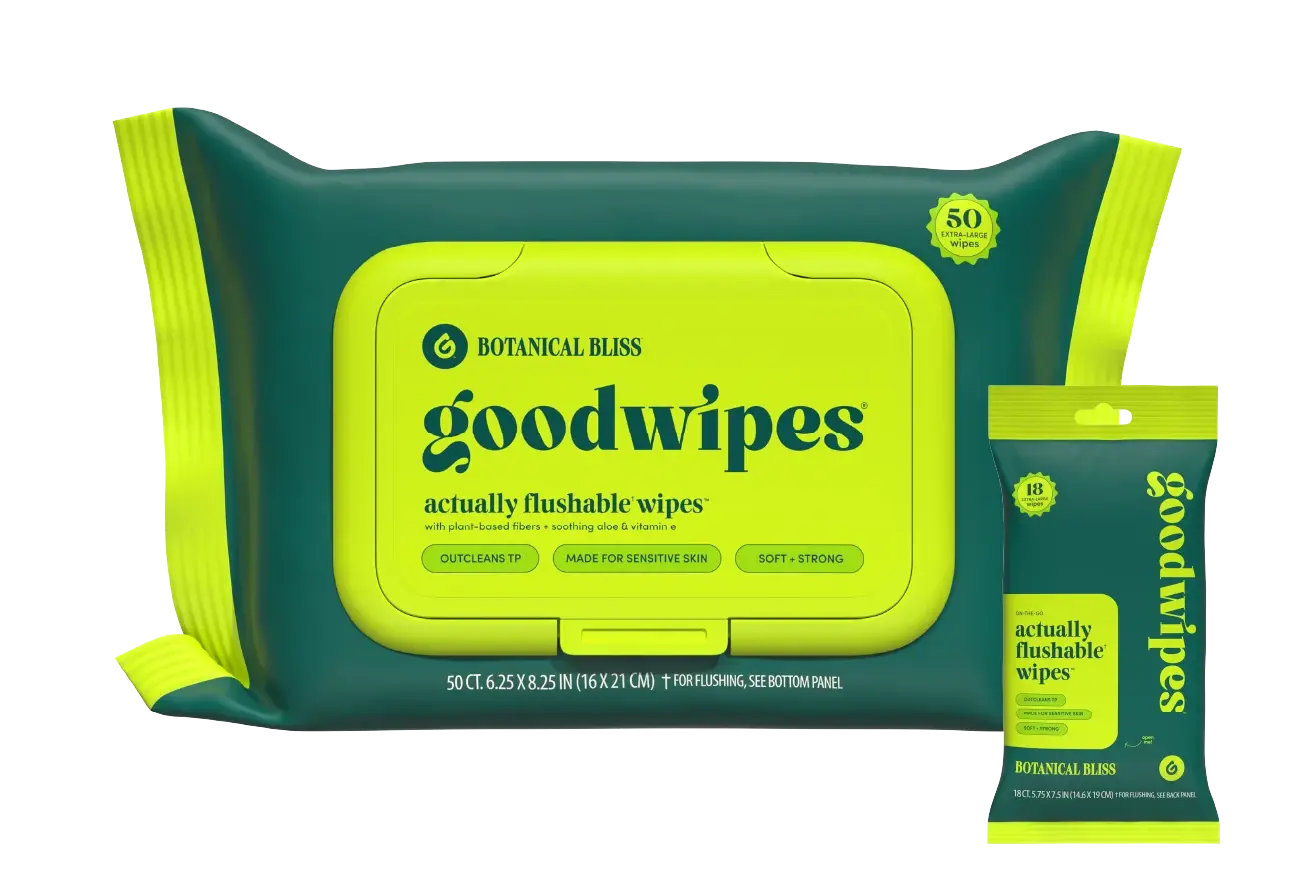
They've got roughly 15,300 doors, growing 63% against a category growing 19, profitable, and they've raised about $5.1 million in their entire existence. That's it! It’s really a feat. They got there on OOH, experiential, and collabs like the Liquid Death one rolling into 4,000 Walmarts, while Kimberly-Clark could outspend them in a heartbeat.
What I like most is that they're gender neutral in an aisle where the competition literally named itself Dude Wipes. I'm a fan of both brands and Dude Wipes built an empire, so they're probably not losing sleep, but they did paint themselves out of half the market and Goodwipes took advantage of that space they left. Women are the majority of household grocery decision makers, 56% versus 43 for men, so that opening could be worth a few pennies.
And in a GLP-1 era where a lot of people are working hard to stay regular, this category is not slowing down. Gross but true. There's room for both. Good (wipes) for them.
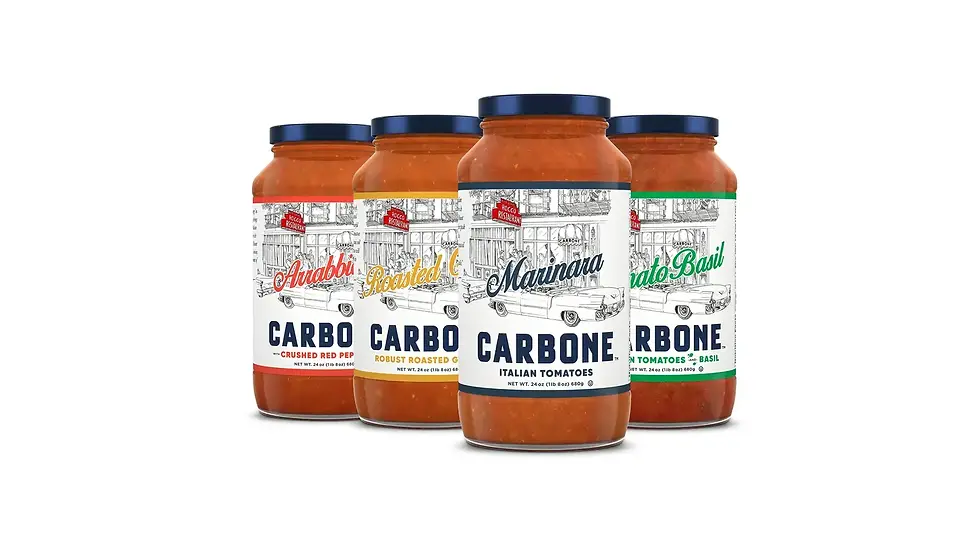
A $100 million in revenue, up 80%, in 30,000 stores, run by 39 people. Campbell's paid $2.7 billion for Rao's, so the price for premium sauce is now public information.
Restaurants can absolutely move into grocery, but it's trickier than building for grocery from day one, and most of them fumble it. Carbone hasn't.
They've staked a real claim in a category that's a staple in kitchens across the country. The open question is whether there's room for a second premium brand now that Rao's got bought.
I haven't tried Carbone yet, but I know the brand and I'd pay up for it. And here's the thing: if the recession everyone keeps threatening us with actually shows up, more people stop eating out. Does a ten dollar jar of restaurant sauce become the replacement for a night at a nice Italian place? That's the bet.

They’ve cornered 19% of the non-alcoholic beer market and 32% of its growth. When I was pregnant, I loved the taste of beer and craved it, and my options were O'Douls and Bitburger. What a sad state of affairs things were for N/A in 2016.
So much has changed since then, including Gen-Z wanting less booze with cannabis replacing some of these occasions. So, Athletic didn't invent the occasion, it finally served the ones that were already there: pregnancy, sobriety, training, driving, a work dinner.
I've got friends and family who quit drinking but still want the hops, and they have a real option. My opinion: NA beer is not a fad. Ten dollar NA cocktails that are juice with a shrub and some bitters thrown in, on the other hand, feel like they've hit the ceiling. Keurig Dr Pepper has held a piece of Athletic since 2022 and Constellation just bought HOPWTR outright after investing in it years ago, so this almost feels like a sure bet.
Honorable mentions
(that are not quite ready but worth watching)
Rotten, a candy brand competing on fiber, and they just landed Target on top of a national Kroger rollout earlier this year. Their marketing is top notch (check out their branding - it’s wild).
Fishwife, culturally enormous and financially small, also incredible packaging and identity elements.
Painterland Sisters, two fourth-generation dairy farmers in Pennsylvania who went from one grocery account to every Whole Foods in the country in about a year (the sisters are adorable to boot).
And JonnyPops, which moves roughly $170 million of ice pops a year, has been profitable since year one, and has raised $615,000 in outside money in its entire life. Then it turned around and bought two factories in cash. Nobody does that anymore.
What to watch for in CPG acquisitions
The tells are boring and consistent. A strategic's venture arm writes a check, which means you've been optioned whether you realize it or not. The founder moves to chairman or innovation and an operator takes the CEO seat.
When the CPG acquisition deal gets announced, watch which number the buyer brags about. When Hershey closed LesserEvil, it led with household penetration going from 5 to 8 percent. Not revenue. Penetration, and the direction it's moving.
If you want to see the whole arc in one brand, look at Good Culture. Cottage cheese went from a punchline to a majority stake at north of half a billion dollars, and the wild part is they were reportedly supplying less than half their demand. Private equity bought it in February, which usually means the real exit is probably still two or three years out (Please PE - don’t ruin this brand - it’s my fave).
We are Left Hand Agency, a CPG media buying agency helping brands grow with short and long-term strategies. Our memory-driven strategies deliver results your marketing and finance teams will champion.