CPG Brand Measurement Is a Leadership Tool, Not a Scoreboard
As part of our ongoing series on growth and measurement for CPG brands, we just spent a post on how guessing ends up costing a business more money over time.
Today, we're shifting from what measurement costs to what measurement is actually for.
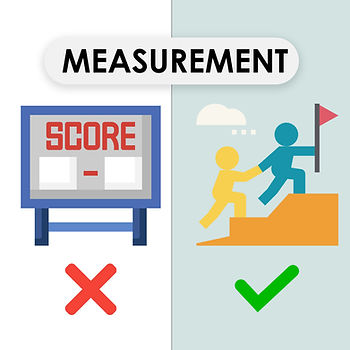
Most organizations treat it like a scoreboard. Marketing puts up a number. Finance checks it against a target. Somebody wins the meeting, somebody plays defense, and the whole exercise turns into a referendum on whether marketing is doing its job.
That's not what good measurement is for. It's not a scoreboard. It's a leadership tool.
The scoreboard trap in CPG brand measurement
I lived inside this trap for years before I ever worked in CPG. Back in local TV news, every single morning started the same way. We'd come in and pull up the previous night's ratings and the previous day's website traffic. If the numbers were down, the day became a scramble to figure out who to blame and what to change, right now, before lunch.
Nobody ever stepped back and asked whether we were trending up or down over the last month. We just reacted to whatever the overnight number said, every single day, like each one existed in a vacuum. It's the equivalent of inspecting one bad tree and deciding the whole orchard isn't going to produce fruit this year.
That daily scramble didn't make us sharper. It made us defensive. Everyone had access to the same numbers and none of us were actually interpreting them, because nobody had the time or the mandate to step back far enough to see a trend instead of a single data point. We could see the numbers. We just weren't using them as anything more than a daily referendum on who was winning.
CPG brands fall into the same trap, just on a slower clock. The CMO walks into the room with a chart proving the channels performed well. The CFO walks in with a different chart, built on different assumptions, proving the opposite. The CEO sits between two competing narratives and has to referee a fight where nobody's actually trying to find the truth. They're trying to win.
That posture makes measurement defensive by design. Every report becomes an argument for keeping budget, protecting a channel, or covering a miss. Nobody's asking what's true. Everyone's asking how to look good with the numbers they've got.
The problem isn't that marketing and finance disagree. Disagreement is healthy. The problem is that they're often disagreeing with different scorekeepers, different rules, and no shared definition of what winning even means.
What a unified narrative looks like
Flip the posture and something changes immediately. Instead of competing charts and conflicting conclusions, marketing and finance start walking into the room with one story.
What's working right now. What's still being tested. What's building future growth even though it doesn't show up on this month's dashboard. And how risk is being managed along the way.
That's not marketing's story or finance's story. It's the business's story, and it's the only version worth bringing to a CEO who has better things to do than adjudicate a metrics dispute. When the narrative is unified, measurement stops being a defense exhibit and starts being an explanation. The CEO isn't being sold on a number. They're being shown how the business actually works right now.
Cross-functional alignment: the part that has to happen before the meeting

Here's the part people skip because it's less fun than presenting results. None of that unified narrative is possible if marketing and finance haven't already agreed, in advance, on what success means.
This isn't about getting CMOs and CFOs to like the same metrics. It's about getting them to agree on the vocabulary before the scoreboard gets built. What counts as a win. What time horizon matters. Which risks are acceptable and which aren't. Do that work upfront, and budget conversations turn strategic instead of reactive. Skip it, and every quarterly review turns into the same argument with new numbers.
The CMO wants growth. The CFO wants confidence and manageable risk. Those aren't opposing goals, they're two halves of the same goal, and measurement is the thing that's supposed to prove they're actually pointing the same direction. When it does that job well, it stops being a scoreboard one side has to win. It becomes the shared language that lets both sides move.
The bigger picture
A scoreboard tells you who's ahead. A leadership tool tells you where you're actually headed, and whether the people steering agree on the destination.
Growth isn't driven by dashboards. It's driven by decisions, and the best measurement framework is the one that helps the people in the room make those decisions together instead of defending their half of them separately.
That's the shift. Not better charts. A better reason to be in the room at all.
Up next, we're digging into why alignment matters more than precision, and why chasing the perfect metric is often less valuable than getting everyone rowing in the same direction with an imperfect one.
We are Left Hand Agency, a CPG media buying agency helping brands grow with short and long-term strategies. Our memory-driven strategies deliver results your marketing and finance teams will champion.