
5 Marketing Science Experts Who Changed the Way I Think About Growth | Left Hand Agency CPG High Five
If you work in CPG marketing and your feed is still dominated by platform updates, attribution debates, and AI hot takes, you're missing some of the most important voices in modern marketing.
Over the past few years, I've become increasingly obsessed with marketing science. Not because I think marketing is purely a science. It isn't.
Marketing is both science and artistry.
The best marketers understand how to blend creativity, intuition, and storytelling with a deep understanding of how consumers behave and how brands actually grow. The problem is that too many marketers lean heavily on the artistry side while ignoring the science.
Vibes can be dangerous.
If you don't understand the mechanisms that drive growth, it's easy to make decisions that feel right but ultimately move your brand in the wrong direction.
The five marketing science experts below have fundamentally changed how I think about marketing, brand growth, measurement, and effectiveness. If you're serious about becoming a better marketer, these are the people I believe you should be reading, following, and learning from.
1. Byron Sharp

Professor, Ehrenberg-Bass Institute
Key Works: How Brands Grow, How Brands Grow Part 2
Reading How Brands Grow was a pivotal moment in my career.
I've always considered myself a marketer first and a media buyer second, and I'm constantly looking for ways to ensure the work we do for brands is grounded in evidence rather than assumptions.
Marketing is both science and artistry. The artistry matters, but too many marketers rely on instinct, trends, and what "feels right." Vibes can lead you in the wrong direction if they aren't grounded in an understanding of how growth actually happens.
Sharp's work challenged many of the assumptions I had been taught over the years. His research on mental availability, physical availability, buyer acquisition, and category growth provides a framework for understanding how brands actually grow.
What makes his work so powerful is that it isn't based on opinions or case studies. It's based on decades of empirical research.
The way Sharp lays out the mechanisms behind growth is genuinely paradigm-shifting. My only regret is that I didn't read it much earlier in my career.
If you've never read How Brands Grow, move it to the top of your reading list immediately.
2. Les Binet & Peter Field

Marketing Effectiveness Researchers
Key Works: The Long and the Short of It, Effectiveness in Context
If Byron Sharp explains how brands grow, Les Binet and Peter Field help explain how marketers should invest to make that growth happen.
Their work is essential reading for anyone responsible for allocating marketing budgets.
What I appreciate most is that they don't frame brand and performance marketing as opposing forces. Instead, they demonstrate how the two work together and why over-investing in either can limit growth.
Their research reinforces many of the principles Sharp outlines while providing practical guidance on balancing long-term brand building with short-term sales activation.
They also spend time exploring the murky middle ground: performance marketing that behaves like brand marketing and brand marketing that drives measurable business outcomes.
That's an incredibly difficult balance to achieve and, frankly, I don't think many brands get it right.
Understanding their work helps marketers recognize what effective balance actually looks like and why both sides of the equation matter.
3. Andrew Tindall
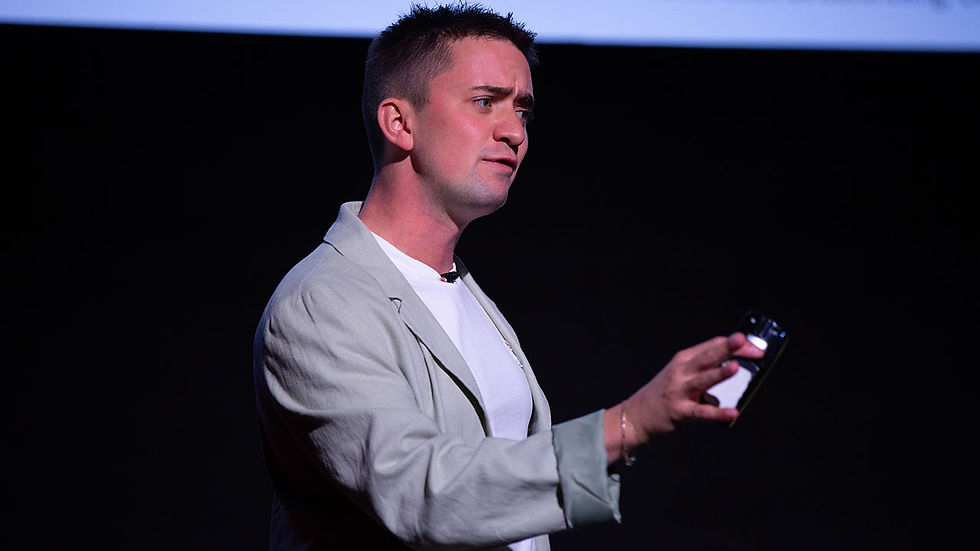
Vice President of Global Partnerships, System1
Key Works: Compounding Creativity and Advertising Effectiveness Research
Andrew Tindall is one of my favorite marketing science voices right now because he makes incredibly complex concepts accessible without oversimplifying them.
What impresses me most is that he's wise well beyond his years when it comes to both consumer behavior and advertising effectiveness.
You'll often see him sharing stages, panels, and conversations with industry giants like Les Binet and Mark Ritson. It's amazing to watch him hanging out at Cannes with some of the biggest names in marketing science. He's like a young man in a sea of wise men, and he absolutely holds his own.
I don't always agree with every conclusion he reaches, but that's part of what makes him worth following. His arguments are consistently backed by research, evidence, and thoughtful analysis.
He's not chasing attention. He's trying to understand why things work and why they fail. He likes to boil down the reasons campaigns succeed or fail and make those lessons understandable for everyday marketers.
His work on Compounding Creativity was particularly impactful for me. It reinforced the importance of consistency, long-term investment, and the cumulative effects of great creative over time. It's one thing to talk about brand building. It's another to explain the mechanisms that make it work.
Andrew has a unique ability to make complicated marketing science concepts approachable and even funny. That's a rare skill, and it's a big reason his work resonates with so many marketers.
4. Mark Ritson

Marketing Professor, Consultant, and Founder of Mini MBA
Key Works: Mini MBA in Marketing, Mini MBA in Brand Management
Mark Ritson is a teacher in the truest sense of the word.
Through his writing, speaking, consulting, and Mini MBA programs, he's helped shape how an entire generation of marketers thinks about strategy.
In fact, I think every company should put their CMO through the Mini MBA and require them to read How Brands Grow while they're at it. Maybe even submit a book report when they're done.
What I appreciate most about Ritson is his commitment to marketing fundamentals.
In an industry obsessed with chasing the next trend, platform, or technology, he's relentless about bringing marketers back to the strategic principles that actually drive growth.
He's also unapologetically direct.
As an academic, he brings rigor to his arguments. As a commentator, he's cheeky, entertaining, and unwilling to tolerate marketing nonsense. He calls things exactly as he sees them, whether people agree with him or not.
I haven't taken the Mini MBA yet, but it's firmly on my list. I know I'll learn a tremendous amount from it when I do.
And if Mark ever accepts my LinkedIn connection request, I'm pretty sure I'll feel like I've officially made it as a marketer.
5. Jenni Romaniuk

Associate Director, Ehrenberg-Bass Institute
Key Works: Building Distinctive Brand Assets, Better Brand Health
Jenni Romaniuk is one of the world's leading experts on brand growth, distinctive assets, and brand health.
Her work should be required reading for both marketers and designers.
Her research on distinctive brand assets is particularly important for anyone working on packaging, creative, or brand identity. One of the biggest lessons from her work is that marketers often underestimate the value of the assets their brands have spent years building.
Too many leaders join a company and immediately want to refresh the logo, redesign the packaging, or modernize the brand without fully understanding what those assets are doing for recognition and memory structures in the minds of consumers.
Most of us were never formally trained on these concepts. College certainly didn't prepare me for them.
But where Jenni's work resonates most with me is around brand health.
I believe many marketers are undertrained when it comes to measuring the health of a brand, which often leads us to over-rely on the metrics that are easiest to report upward.
I've been that marketer.
I've stared at the dashboards and performance metrics that were easy to show my boss instead of digging deeper into the indicators that help explain the source of growth and long-term brand strength. I've been focused on the numbers I could see and report instead of trying to uncover the true drivers of growth and the longer-term ways to measure success.
The good news is that many brands are beginning to embrace brand health measurement and invest in tools like Tracksuit to monitor awareness, consideration, preference, and other leading indicators of future growth and durability.
Jenni's work provides a framework for understanding what those metrics mean and why they matter.
She's also one of those rare academics who can make complex ideas approachable. If you ever get the chance to hear her on a podcast, take it. She's absolutely delightful to listen to.
Final Thoughts On These Marketing Science Experts
What I love about these experts is that each one contributed a different piece of the puzzle for me.
Byron Sharp taught me how brands grow.
Les Binet and Peter Field taught me how to invest for growth.
Andrew Tindall taught me how to translate marketing science into modern marketing practice.
Mark Ritson reinforced the strategic fundamentals that too many marketers overlook.
Jenni Romaniuk helped me understand how to measure and protect long-term brand strength.
Together, they've fundamentally changed how I think about marketing.
If you're a CPG marketer looking to sharpen your thinking, challenge your assumptions, and become more effective at driving growth, start with these five.
Your future self, your future brands, and maybe even your future marketing budget will thank you.
We are Left Hand Agency, a boutique media buying agency built for CPG brands. We help brands make smarter, more holistic media investments across retail media networks, out of home, CTV, paid search, and streaming audio. If your media strategy needs a second opinion, we should talk.


